


mail@facirus.ru


 Automatic pellet boilers
 Automatic wood chip boilers
 Two-pass gas boilers
 Three-pass gas boilers
 Automatic coal boilers
 Manual solid fuel boilers(coal/firewood/briquettes)
 Semi-automatic boilers(coal/firewood/briquettes)
 Outdoor hoppers and fuel stores
 Solid fuel block-modular boiler houses
 Block-modular boiler houses for liquid and gaseous fuels
 Hot air generators
 Pellet stoves

Fuel pellets: history, types and features. Which pellets should you choose for a solid fuel boiler?
Pellets are small cylindrical granules produced by pressing. Wood and agricultural waste, as well as peat, are used as raw materials.
A bit of history
Pellets appeared in the 1970s. The American Rudolf Gunnerman was looking for a way to cut the cost of transporting sawdust from his own woodworking businesses and found a solution - pressing it into compact granules.
The idea proved especially timely against the backdrop of the 1973 oil crisis: demand for wood stoves rose sharply, and engineers began thinking about automating solid fuel combustion. Gunnerman continued his research in this area and in 1976 developed a new method of burning pellets, which eventually led to the first pellet boilers.

Types of pellets
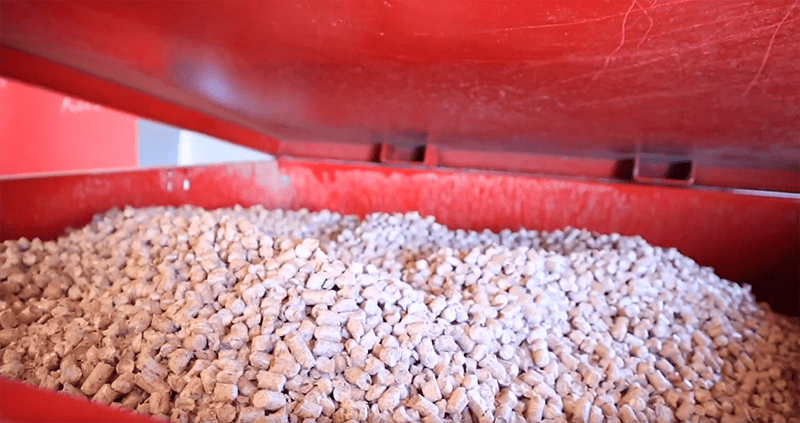
Fuel pellets fall into two main categories - wood pellets and agro-pellets - depending on the raw material. Wood pellets, in turn, are divided into white and industrial (grey) pellets.
White pellets are a premium fuel made exclusively from debarked wood. They are light in colour, have a low ash content (no more than 0.5%) and a high calorific value of 17–18 MJ/kg.
Industrial (grey) pellets are also made from wood waste, but with bark and branches added. They are darker, and their ash content is higher - from 0.7% to 1.5%. Their calorific value is lower than that of white pellets - 16–17 MJ/kg - but the difference is small.
Agro-pellets are an economical fuel option with an ash content of about 3.5% and a calorific value of about 15 MJ/kg. Sunflower or buckwheat husks are most often used as raw material, less often crushed reed. Apart from the lower energy output, the main drawback of agro-pellets is their high ash content, which requires frequent boiler cleaning. With agro-pellets, cleaning has to be done daily, whereas owners of boilers running on white pellets do it on average once every 1–2 weeks.
How to choose pellets?
The key parameters when choosing fuel pellets are ash content and composition.
Burning pellets in a boiler produces ash that must be removed regularly. With good fuel, cleaning before each new hopper load is enough, while low-quality fuel requires more frequent intervention. For domestic boilers this is usually not a problem, but with high-output industrial boilers frequent cleaning can become a serious burden on operating staff.
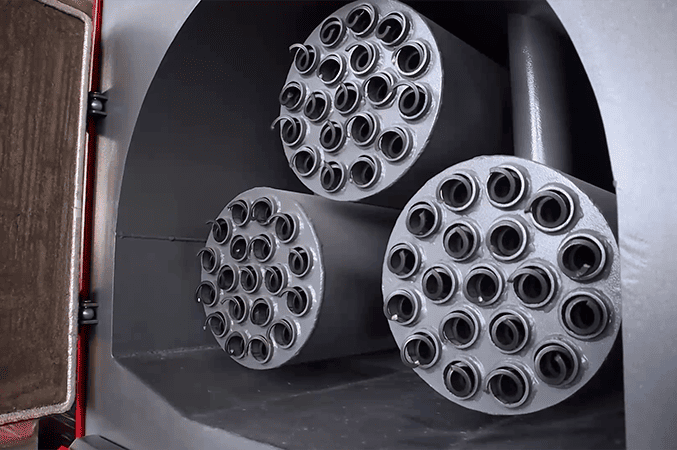
Some modern boilers, including models of the FACIbrand, are equipped with an automatic ash removal system. They use special spirals that remove ash and soot from the heat exchanger fire tubes and send them to the ash box. The cleaning frequency is adjusted depending on the fuel type and boiler settings.
What is important to know about pellet composition?
Good pellets contain no chemical additives, glue or impurities such as sand. Lignin, a natural substance found in wood, acts as a natural binder. The higher its content, the stronger and better the granules.
Some boiler owners check pellet composition in a simple way: they drop a granule into water. If it breaks down into a uniform wet mass, there are no additives. If it keeps its shape, that is a reason to be wary.
In practice, however, many buyers are guided primarily by price and delivery cost rather than a detailed analysis of composition and ash content.
Compatibility of pellets with the boiler
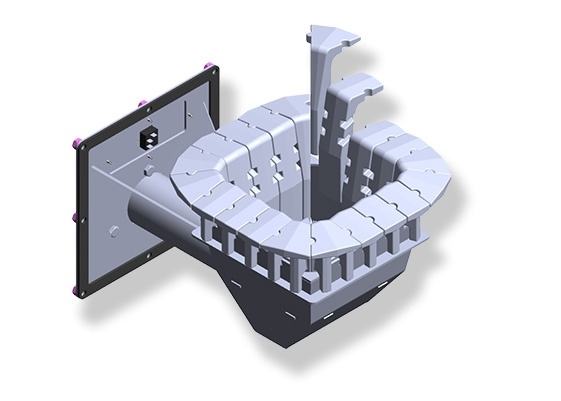
Can low-quality fuel damage the boiler? boilers FACI can work efficiently with any type of pellets thanks to the design of the pixel retort burner with a large bed area and the secondary air supply system.
How does it work? The fan supplies primary air to the burner, where the pellets ignite, and the boiler enters operating mode. Then secondary air enters the combustion chamber to burn off unburnt particles. This improves combustion completeness and overall boiler efficiency.
In addition, the pixel burner is easy to maintain: it consists of separate modular segments (pixels), which are easy to replace when worn or burnt out, without dismantling the whole boiler or the rather complicated replacement of the entire burner.
You will find more information about FACI pellet boilers and their technical features on our website. For advice, leave your contact details in any of the feedback forms - our managers will be happy to help you!
We have tried to cover the important aspects of choosing pellet fuel and hope this article will help you make the right, well-considered decision!
- Authorisation
- Registration