


Your region:: Elista


E-mail:
mail@facirus.ru
mail@facirus.ru


 Automatic pellet boilers
 Automatic wood chip boilers
 Two-pass gas boilers
 Three-pass gas boilers
 Automatic coal boilers
 Manual solid fuel boilers(coal/firewood/briquettes)
 Semi-automatic boilers(coal/firewood/briquettes)
 Outdoor hoppers and fuel stores
 Solid fuel block-modular boiler houses
 Block-modular boiler houses for liquid and gaseous fuels
 Hot air generators
 Pellet stoves

Outdoor hoppers for pellet boilers
 High level of autonomy
 Remote control
 Fully compatible with FACI boilers
Configuration:

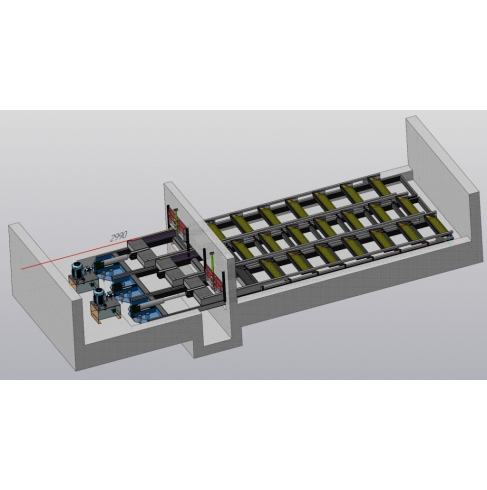
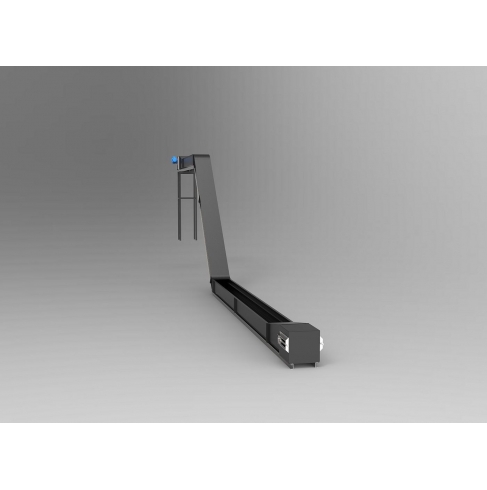
Configuration:
The package includes:
Fuel capacity - from 100 m³
Available on lease(see terms)
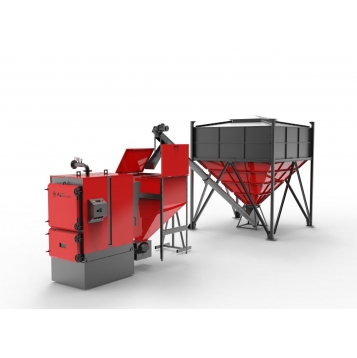
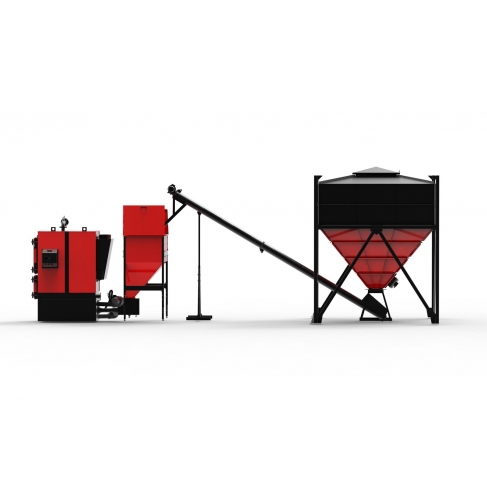
Configuration:
The package includes:
Fuel capacity - 7 m³
Available on lease(see terms)
Configuration:
The package includes:
Fuel capacity - 12 m³
Available on lease(see terms)
Configuration:
The package includes:
Fuel capacity - 17 m³
Available on lease(see terms)
Configuration:
The package includes:
Fuel capacity - 22 m³
Available on lease(see terms)
A pellet boiler is unique in that it can run autonomously for a long time. To keep it running without interruption, you only need a constant supply of fuel. This is provided by a built-in or outdoor hopper. A built-in hopper is mounted on the boiler and is not very efficient; an outdoor pellet store is more convenient. It is described in more detail below.
What hoppers for solid fuel heating boilers are for
It is a container into which fuel is loaded first and then fed into the boiler. A pellet store supplies fuel for heating a cottage or an industrial site for a week or for the whole heating season, depending on the size of the boiler. An external pellet hopper for a pellet boiler can make your life much easier. You no longer need to keep an eye on the equipment or add fuel, because the automation does it all. All you need to do is buy a hopper and fill it with fuel.Types of outdoor pellet hoppers and stores
Large automatically fed pellet storage hoppers come in different capacities and materials. When choosing a pellet store, consider not only the size of the heated premises and the installation site but also how long it can keep the boiler running autonomously. The larger the capacity, the less often you need to refill it. Pellet hoppers can be made of fabric, metal, plastic or wood; the choice of casing material depends on the customer's needs. Pay attention to the length of the auger tube: it should be about nine metres. If it is much longer, the efficiency of the heating boiler will suffer. Several types are available depending on how pellets enter the hopper: Stand-alone.This is the most convenient option, providing from several hours to a week of operation, depending on the amount of pellets loaded. Additional container.It extends boiler operation to up to two months. A popular option today is a plastic container with a sloping V-shaped base. It has a number of advantages: convenience, better cushioning and lower fuel supply costs. Its one drawback is that twenty percent of the storage volume is lost. Underground.Such a tank is quite difficult to install, as it must be level with the boiler room. Before choosing this option, careful calculations and design are needed, and a suitable location must be selected. Its advantages include easy loading through a special hatch and the tank being located away from the house, which improves fire safety and greatly reduces the risk of a sudden fire.Wood chip storage and feed systems
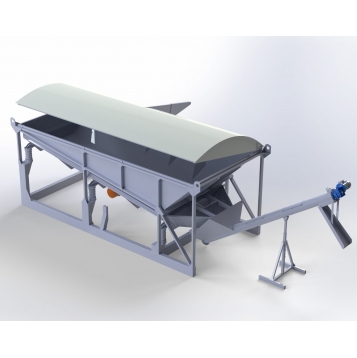
The vibrating hopper with wood chip feed is designed to work together with FACI FSS heating equipment. Vibrating hoppers with a capacity of 8.5 m³ can be fitted to FACI FSS boilers in any configuration, which makes them suitable for small businesses. We recommend combining the units with block-modular boiler houses. Heat supply companies and large businesses choose such solutions to heat major infrastructure facilities. The boiler hopper has a special configuration developed for fuels such as wood chips and pellets. A Russian-Italian team of engineers carefully designed the agitation system that prevents fuel bridging, and the design ensures even combustion in the boiler unit. Wood chips are most often fed through a hatch or by a twin-auger screw feed that picks up the sawdust and delivers it to the combustion chamber. The augers help distribute pellets over the entire area. In some cases a vacuum pump is used, but such models cost many times more.Fuel store systems
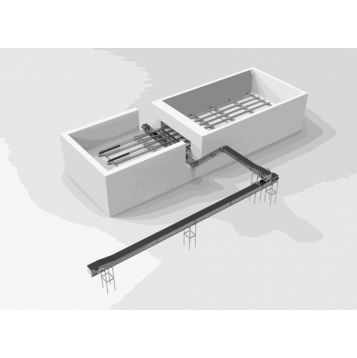
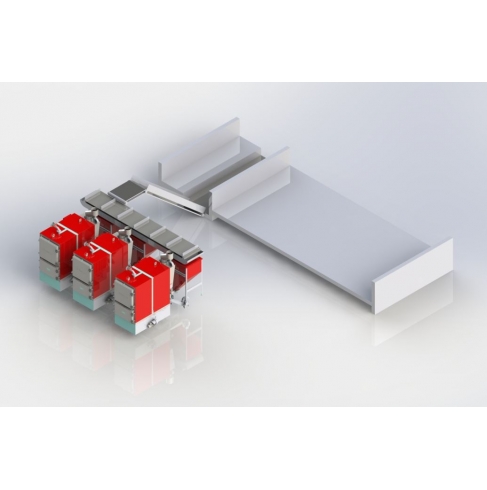
The FONDO VIVO store is designed to work with FACI FSS wood chip boilers and FACI BLACK coal boilers. Fuel capacity is from 100 m³, and fuel is fed into the hopper automatically on a signal from the FACI boilers. The noise level of the motor fitted to the units does not exceed 85 dB. The stores and boilers are connected by a single control unit and therefore work as one, which is very convenient. The control system accurately monitors the fuel level in the standard hopper using high-precision sensors at the upper and lower levels. When the tank is about to run empty, the operator receives an SMS alert via the internet app. The unit is delivered in large pre-assembled sections, so it is easy to transport and install on site. As soon as the tank reaches its maximum level, feed from the store stops; when the minimum level is reached, it starts again. Fuel is moved to the boiler house by a well-tuned conveyor system. High-quality sensors make it possible to monitor every process separately, and if an error occurs, the operator can quickly identify its cause for each specific unit.Thank you for your request!
Our managers will contact you shortly
Sign in
- Authorisation
- Registration
Enter a city name:
or choose from the list: