


Your region:: Syktyvkar


E-mail:
mail@facirus.ru
mail@facirus.ru


 Automatic pellet boilers
 Automatic wood chip boilers
 Two-pass gas boilers
 Three-pass gas boilers
 Automatic coal boilers
 Manual solid fuel boilers(coal/firewood/briquettes)
 Semi-automatic boilers(coal/firewood/briquettes)
 Outdoor hoppers and fuel stores
 Solid fuel block-modular boiler houses
 Block-modular boiler houses for liquid and gaseous fuels
 Hot air generators
 Pellet stoves

Heating air heaters
 Instant heating
 The safest possible fuel feed system
 No liquid heat carrier system required
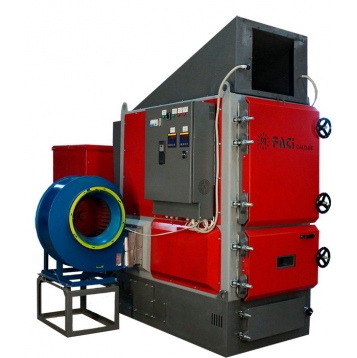
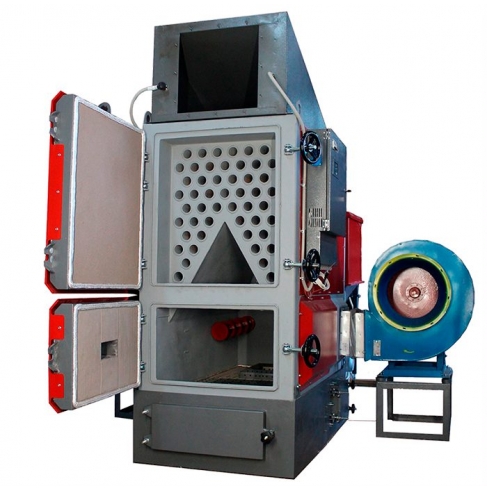
FACI ARIA CALDA 105 hot air generator
- Output: 105 kW
- Fuel type: Pellets, coal, wood chips. Backup fuel: firewood (manual mode)
Configuration:
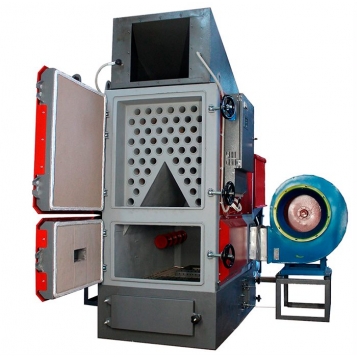
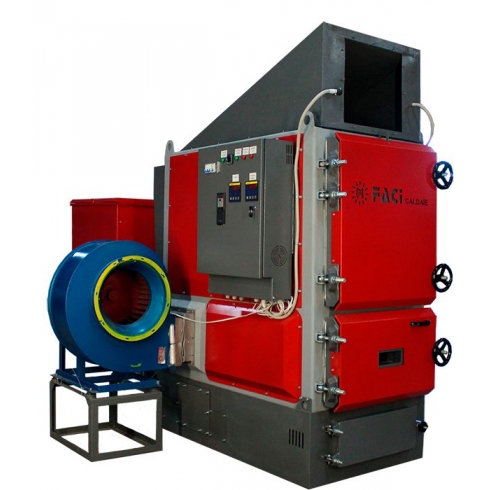
FACI ARIA CALDA 130 hot air generator
- Output: 130 kW
- Fuel type: Pellets, coal, wood chips. Backup fuel: firewood (manual mode)
Configuration:
FACI ARIA CALDA 215 hot air generator
- Output: 215 kW
- Fuel type: Pellets, coal, wood chips. Backup fuel: firewood (manual mode)
Configuration:
FACI ARIA CALDA 258 hot air generator
- Output: 258 kW
- Fuel type: Pellets, coal, wood chips. Backup fuel: firewood (manual mode)
Configuration:
Equipment features
The key element of the whole system is the air heater (gas air heater), to which the supply air duct is connected. Other ducts lead from the same space and return the air to the furnace chamber for reheating. In other words, the system runs on recirculated air. If necessary, a special damper can be used to draw in outdoor air. This modification solves two problems at once:- raising the temperature in the rooms;
- ventilating them.
- a compressor;
- an evaporator;
- a condenser for air conditioning;
- a gas heat exchanger for heating;
- a damper system for mixing in fresh air;
- control automation.
Air heaters: types and kinds
Heating air heaters can be classified by fuel type. Gas.This equipment is the most popular in its market segment. It runs on liquefied and mains gas. The main advantage is 100% combustion of the fuel without any residual combustion products. Gas is much more environmentally friendly than other fuels. Efficiency is 91%, the highest among all heat generator modifications. The units are sold in two configurations differing in heat exchanger type: closed or open. The closed model is safer but more expensive than the open one. Diesel.The unit is fuelled with diesel, which may be replaced with kerosene. There are two versions differing in nozzle type and diesel feed method: drip or atomising. The latter ensures perfectly even atomisation throughout the combustion chamber. Multi-fuel.These units can run on any fuel: vegetable or animal fat, waste oil, diesel. Such industrial heat generators are installed mainly at sites that need to process or dispose of oil and fats. Output is much lower, and slag may form after combustion. For this reason the models have two combustion chambers, so one can be cleaned without interrupting operation while combustion continues in the other. Solid fuel.These units combine a classic stove with a diesel or gas unit. They are equipped with a fuel chamber, grates and a reliable door. Firewood, coal and wood pellets can be used as fuel. Efficiency is 85%. Before buying, bear in mind that installation requires a lot of space and the combustion chamber must be periodically cleaned of accumulated slag. Vortex.The unit needs antifreeze or water to operate; they convert electrical energy into heat. Stationary units are divided into suspended and floor-standing. Suspended units are compact and can be installed outside or inside a building, on wall brackets or on the roof. Floor-standing hot air heat generators can be horizontal or vertical; horizontal ones are suitable for low-ceilinged rooms.How to choose: what to look for
When buying heating air heaters, first consider the heat exchanger diameter. The best choice is one whose heat exchanger diameter is 1/5 larger than the burner. The output of a heat generator depends directly on the amount of kJ needed to reach a certain air temperature. The optimal option can be determined based on:- the floor area;
- the thermal insulation of walls and ceilings;
- the number of gates;
- how often they are opened;
- the climate of the region;
- internal heat gains.
- What output is optimal?
- Where will the air heat generator be installed?
- How exactly will it be installed?
- Does the unit need to be connected to a duct system?
- Where will the duct connection be?
- Which fuel is preferable given the cost of air heating?
- What will the heat exchanger be made of?
Thank you for your request!
Our managers will contact you shortly
Sign in
- Authorisation
- Registration
Enter a city name:
or choose from the list: